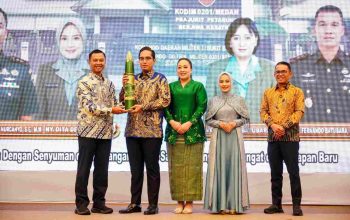
The School of Competition Law & Market Regulation, Indian Institute of Corporate Affairs (IICA) in collaboration with the Center for Competition Law and Policy, NLU Jodhpur organized a virtual conference ‘Competition Law and Market Definition in Digital Era.’on 24th October 2020 pic.twitter.com/1KQ8VfsTka
— Indian Institute of Corporate Affairs (@IICAOfficial) October 29, 2020
While natural language processing , natural language understanding , and natural language generation are all related topics, they are distinct ones. Given how they intersect, they are commonly confused within conversation, but in this post, we’ll define each term individually and summarize their differences to clarify any ambiguities. According to Zendesk, tech companies receive more than 2,600 customer support inquiries per month.
natural language understanding (NLU)
NLU chatbots allow businesses to address a wider range of user queries at a reduced operational cost. These chatbots can take the reins of customer service in areas where human agents may fall short. For example, a call center that uses chatbots can remain accessible to customers at any time of day. Because chatbots don’t get tired or frustrated, they are able to consistently display a positive tone, keeping a brand’s reputation intact. NLU can give chatbots a certain degree of emotional intelligence, giving them the capability to formulate emotionally relevant responses to exasperated customers. It enables computers to evaluate and organize unstructured text or speech input in a meaningful way that is equivalent to both spoken and written human language.